Brazil is the largest coffee producer in the world, accounting for nearly one-third of all coffee production globally. But beyond the impressive numbers lies a deeply rooted coffee culture and a wide range of flavor profiles, influenced by Brazil’s diverse geography, climate, and farming techniques.
Whether you’re a casual drinker or a coffee enthusiast, understanding Brazil’s coffee-growing regions will give you a new appreciation for every cup you brew.
Why Brazil Is a Coffee Powerhouse
Brazil’s climate and terrain make it an ideal location for coffee cultivation:
- Vast highlands and tropical climates
- A mix of dry and wet seasons, perfect for processing
- A long history of coffee farming, with generations of expertise
- Infrastructure and technology for large-scale and small-lot production
But Brazil is not just about quantity — it’s also about quality and variety. Let’s take a tour through the major coffee regions of Brazil and discover what makes each one unique.
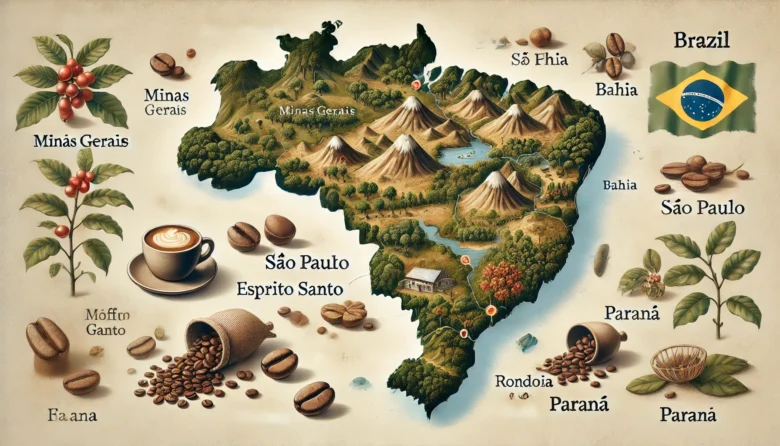
1. Minas Gerais – The Heart of Brazilian Coffee
Minas Gerais is the largest coffee-producing state in Brazil, responsible for more than 50% of the country’s total output.
Main Regions in Minas Gerais:
- Sul de Minas (South of Minas): Known for small farms and specialty-grade beans. Coffees are well-balanced with notes of chocolate, nuts, and gentle fruitiness.
- Cerrado Mineiro: A recognized Denomination of Origin. Coffees from this region are clean, consistent, and often have a nutty, chocolatey flavor with medium acidity.
- Chapada de Minas: Offers diverse altitudes and microclimates, resulting in complex flavor profiles.
Why It Stands Out:
- Wide range of altitudes (850–1350m)
- Excellent infrastructure
- Focus on both commodity and specialty coffees
2. São Paulo – Tradition Meets Technology
Home to the historic Mogiana region, São Paulo has been growing coffee for over a century.
Key Region:
- Mogiana: Located along the border between São Paulo and Minas Gerais, Mogiana produces coffees with a creamy body, low acidity, and sweet caramel notes.
Why It Stands Out:
- Stable climate and rich volcanic soil
- Use of modern processing equipment and techniques
3. Espírito Santo – A Rising Star
Espírito Santo is Brazil’s top Robusta (Conilon) producer, but it also grows high-quality Arabica in its highland areas.
Key Facts:
- Arabica is grown in the Caparaó region, on the border with Minas Gerais.
- Coffees from Caparaó are gaining international attention for their floral aromas and bright acidity.
Why It Stands Out:
- Focus on sustainable and family-owned farms
- Increasing presence in the specialty coffee market
4. Bahia – Innovation and Quality
A relatively new coffee region compared to others, Bahia began large-scale production in the 1970s, but it quickly became known for high-quality and technologically advanced farming.
Key Regions:
- Chapada Diamantina: High altitudes (up to 1300m) and rich biodiversity. Coffees are bright, clean, and floral.
- Planalto da Bahia: Known for structured acidity and sweet aftertaste.
Why It Stands Out:
- Use of pivot irrigation systems to ensure consistency
- High elevation leads to more complex flavor development
5. Paraná – The Southern Pioneer
In the past, Paraná was a major coffee-producing state. While its output has declined, it still plays a role in Brazil’s coffee story.
What You’ll Find:
- Mostly low-altitude Arabica
- Simple and mild flavor profiles
Why It Stands Out:
- Historical importance in Brazil’s coffee expansion
- Cooler southern climate, rare in coffee-growing regions
6. Rondônia – The Robusta Frontier
Located in northern Brazil, Rondônia is making waves with its high-quality Conilon (Robusta) coffee.
Key Points:
- Increasing interest from specialty Robusta buyers
- Strong body, low acidity, and chocolatey tones
Why It Stands Out:
- Focus on sustainable production and indigenous farming communities
- Seen as the future of specialty Robusta in Brazil
Tasting Brazilian Coffee: What to Expect
Brazilian coffee is known for being smooth, nutty, and chocolatey, with low to medium acidity and a heavy body. However, depending on the region and processing method, you can also find:
- Fruity and floral notes (Caparaó, Chapada Diamantina)
- Balanced and creamy textures (Mogiana, Sul de Minas)
- Clean and sweet cups (Cerrado Mineiro)
Processing methods also vary:
- Natural (dry process): Brings out sweetness and body
- Pulped natural: Balances sweetness with clarity
- Washed: Brighter and more acidic (less common in Brazil)
Brazil and Specialty Coffee
In recent decades, Brazil has made major strides in specialty coffee production. Farmers are experimenting with:
- Controlled fermentation
- Microlots and single-origin labeling
- Innovative drying techniques
- Direct trade with roasters worldwide
Programs like Cup of Excellence have highlighted exceptional Brazilian lots, proving that Brazil is not only a volume leader, but also a quality powerhouse.
Final Sip: Exploring Brazil Through Coffee
From the misty mountains of Minas Gerais to the flatlands of Bahia, Brazil offers a diverse and delicious coffee journey. Each region brings something unique to the table — whether you prefer a rich chocolatey brew or a bright, citrusy cup.
Next time you’re choosing a coffee, take a look at the origin. If it’s from Brazil, you’re likely holding a story of tradition, innovation, and craftsmanship in your hands.